| Home |
|
|||
 | ||||
Tips & Tactics Vol. 3, No. 2Multiple Attacks | ||||
|
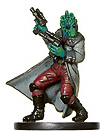
Welcome back to Tips and Tactics, the column of Star Wars gaming advice. (This is actually the third edition of Tips and Tactics. The first edition covered the previous version of the Star Wars Roleplaying Game. The second edition focused more on the Star Wars Miniatures Game, and you can search our full site archives for some of these columns.) This new incarnation of Tips and Tactics will cover both the Star Wars Roleplaying Game Saga Edition and the Star Wars Miniatures Game. Approximately every two weeks, Tips and Tactics will give hints, ideas, advice, or alternative rule ideas. Anything from covering the basics for new players to sneaky strategies for experienced participants is fair game, and from time to time, we'll even discuss how to combine the two games. In this installment, we'll look at how to get multiple attacks -- and how to use them effectively. In previous versions of the Star Wars Roleplaying Game, characters automatically gained access to multiple attacks per round as their base attack bonus increased. This approach had two drawbacks. First, you had to take a full attack action to use the multiple attacks, which encouraged characters to stand still during combat, making fights less dynamic. Second, every attack after the first was made at an increasingly large penalty, so additional attacks were less likely to affect the outcome. As a result, too often combat was slowed by die rolls that had little chance of changing anything, and sometimes whoever won initiative in the first round of combat had an advantage out of balance for a single roll. Of course, it's important for more experienced characters to be better at combat, but multiple attacks per round is just one solution to that issue. In Saga Edition, a single attack is the norm, and more experienced characters deal more damage. This keeps combatants mobile (since you generally have a move action free every round), takes up less time (since there are fewer attack rolls), and makes higher-level characters more effective (since their single shot deals more damage than that of a lower-level character). In addition, feats such as Rapid Shot and Rapid Strike represent multiple attacks by adding another damage multiple, which helps keep the action fast-paced and interesting. 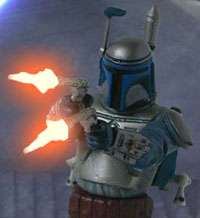 However, you still can make multiple attacks in a round, generally through feat selection. Double Attack and Triple Attack let you take two or three shots, respectively, using weapons from a given class. The Dual Weapon Mastery feats also grant access to multiple attacks and are available earlier in a character's development. Though it would be a major investment of feats, it's possible to use Double Attack, Triple Attack, and Dual Weapon Mastery I, II, and II together to achieve an amazing number of attacks in a single round. For example, a character with all five feats using a double-bladed lightsaber could make four attacks (with a penalty of –10 to each attack roll) as a full attack action. So, when should you take these feats? When should you use them? And for that matter, are you better off with Double Attack or Dual Weapon Mastery when you first start selecting feats? In general, only characters with high attack bonuses (those who mostly have levels in Jedi or soldier, or in prestige classes designed for Jedi and soldiers) should consider these feats. Other characters can't afford the attack penalty that comes with multiple attacks; they should use feats to increase combat effectiveness in other ways. For characters with high attack bonuses, taking feats to allow multiple attacks makes the most sense at around 6th level. Before that level, the penalties are simply too large for your attack bonus to be useful (and besides, Double Attack isn't available at lower levels). Usually, the feats are most useful against multiple weaker foes. While you can deal considerable damage with Double Attack or by using two weapons, when fighting a foe close to your skill level, the penalties such attacks impose mean that you're less likely to hit. You might actually deal less damage each round.  The advantages of using two weapons over Double Attack are obvious -- the feats work with any weapons you can use in one hand, and they can be gained earlier. The drawbacks are more subtle. If you're fighting with two weapons, you don't have a free hand to use a comlink, throw a thermal detonator, punch a command console, or grab a fallen comrade. Another advantage is the availability of Triple Attack at higher character levels. A well-built character with a high Dexterity and feats and talents dedicated to increasing ranged attack bonuses can challenge numerous lesser foes with Triple Attack, especially if she can find cover during the battle. If you want to use Double Attack with a lightsaber, blaster rifle, or heavy weapon, you should also look at the Multiattack Proficiency talents for the elite trooper and the Jedi Knight prestige classes. Never risk multiple attacks if doing so leaves you exposed. Triple Attack should be an option in combat, not a requirement. It's often better to move to a superior position, ready a piece of equipment, or manipulate the battlefield to your advantage than to stand in one spot and make two or three attacks. The only time you should use a double-bladed lightsaber with Dual Weapon Mastery is if you see no good options other than attacking. Activating Multiple AttacksIn the Star Wars Miniatures Game, Double Attack and Triple Attack are options on some units, though they still require giving up movement in exchange. Again, don't depend on these extra attacks -- use them only when you don't have a better tactical choice. Your opponent is obviously motivated to outmaneuver you so that your characters don't have the chance to use multiple attacks. To counter this, place such characters to cover areas that your opponent must move through, or move them to positions that your opponent doesn't want them to reach. In this way, you force your opponent to make a choice -- either allow you to gain a positional advantage, or expose his squad to multiple attacks. One important aspect of such tactics is having activations left after your opponent has used all of his. It's possible to do this by building a larger squad out of numerous cheap units, allowing you to have figures left to activate when your opponent does not. You can also find figures that make such tactics more likely to function. For example, choose a character with a chance to call on additional figures, such as the Rodian Black Sun Vigo. Jabba the Hutt is particularly good for this tactic, as you can add 30 points of Fringe characters after you see your opponent's squad. This means that you know exactly how many units the opposing squad has, and you can choose enough low-point figures to beat that number (or give up and choose a high-point Fringe character).
You can also affect your activations in other ways. One cunning tactic is to base a squad on San Hill. His commander effect causes you to activate only one character each phase. This slows down your entire game, allowing you to have activations left even if your opponent has more characters in his squad. Even better, if you roll a 1 for initiative, you can use San Hill's Separatist Reserves 20 ability. Combine this tactic with characters that can bring further reinforcements or that can help manipulate the battlefield (such as R2-D2, Astromech Droid or Lobot, who also has a reserve), and you'll dramatically increase the chance of making the most of your Double Attack. About the AuthorOwen Kirker Clifford Stephens was born in 1970 in Norman, Oklahoma. He was introduced to gaming by his uncle in 1978 and was instantly hooked. He later enrolled in creative writing courses taught by Forgotten Realms novel author Mel Odom. In 1997, he attended a TSR Writer's Workshop, and later that year, his first professional work saw the light of day: an article on elven names in issue 251 of Dragon magazine. In 2000, Owen moved to the Seattle area with his wife and three cats after accepting a job as a Game Designer at Wizards of the Coast. There, he worked on numerous Star Wars Roleplaying Game products and the Wheel of Time Roleplaying Game. Fourteen months later, he returned to Oklahoma and picked up his freelance career, writing for numerous companies, including Green Ronin, Paizo, White Wolf, and Steve Jackson Games. Owen co-authored the Star Wars Roleplaying Game Saga Edition Core Rulebook and has contributed to numerous licensed RPG products, including The Wheel of Time, EverQuest, Black Company, and Thieves' World. | ||||